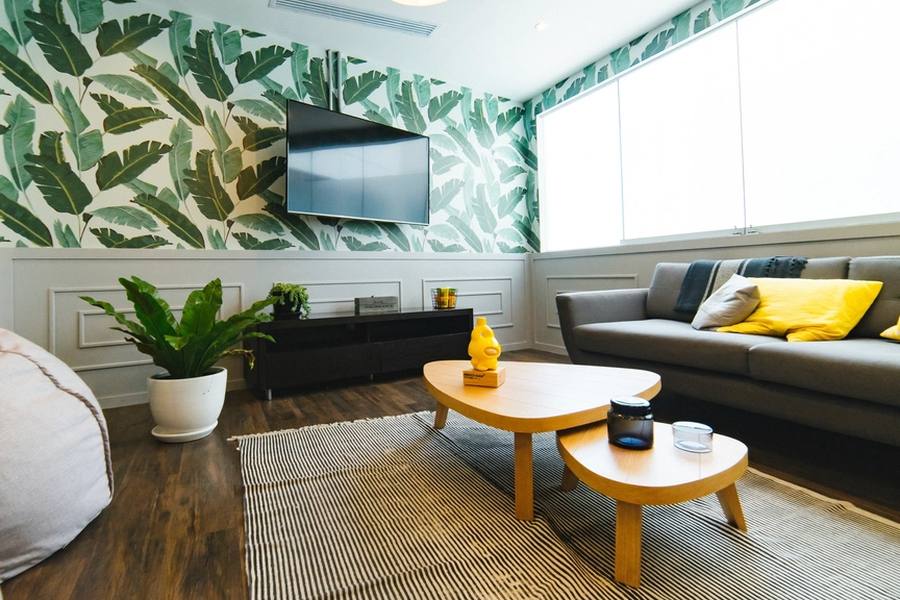
Image illustrative (photo de stock) ; ce n'est pas le produit exact.
Rugs Are Almost Always Too Small
The commonest mistake in buying a rug is choosing one too small, which leaves furniture marooned around an island of rug and makes a room look disconnected.
The usual guidance is that at least the front legs of surrounding furniture should sit on the rug, which visually ties the arrangement together.
A rug that seems large in a shop frequently looks small in a room, and measuring the intended area with tape on the floor before ordering is what prevents the mistake.
Wool Resists Stains Naturally
Wool fibres have a natural lanolin coating that repels liquid briefly, which means a spill blotted quickly often leaves nothing behind.
It also hides soiling well because the fibre structure scatters light, and wool rugs look clean for longer than synthetic ones of the same colour.
That resilience is why wool has been the standard rug material for centuries, and it is a genuine functional property rather than a traditional preference.
Shedding Is Normal At First
New wool rugs shed loose fibres for weeks or months, which alarms people who think the rug is falling apart.
Those are short fibres left from manufacturing working their way out, and shedding reduces substantially once they are gone.
Vacuuming without a beater bar during that period removes them without pulling at the pile, and heavy beater-bar vacuuming on a new wool rug accelerates shedding considerably.
Pile Height And Where It Suits
Low pile rugs are easier to clean, allow doors to open over them and suit dining rooms where chairs move across them.
High pile and shag rugs feel better underfoot and trap considerably more dirt, and a dining room shag rug is a maintenance mistake.
Matching pile to the room and its use determines whether a rug is a pleasure or a problem, and this is separate from how it looks.
Rotating a rug half a turn every six months evens out both wear and fading, since the area near a door or under a walkway takes disproportionate traffic and a sunlit edge fades faster than the rest.
Underlay Is Not Optional
A rug on a hard floor slides, which is a trip hazard and wears the rug backing, and a rug on carpet moves and creases.
An underlay grips the floor, adds cushioning that extends rug life considerably, and prevents the rug creeping.
It also stops rubber-backed rugs marking some floor finishes, which is a real problem with vinyl and some sealed wood floors.
Construction affects durability as much as fibre does, with hand-knotted rugs lasting generations, hand-tufted ones being cheaper and shedding more, and machine-woven ones being cheapest and perfectly serviceable. Hand-tufted rugs have a glued backing that eventually delaminates, which is why a very old hand-tufted rug is rare where old hand-knotted ones are common. Knowing which construction you are buying explains most of the price difference between similar-looking rugs.
The Verdict
The right material for a rug that will be walked on for years, with size being the decision that most determines whether it works in the room.
Wool sheds at first, high pile is wrong in dining rooms, and an underlay is necessary rather than optional.
Buy it larger than you think. A rug too small is the commonest mistake and it makes a whole room look disconnected.
En un coup d'œil
Avantages
- Natural lanolin repels spills briefly
- Hides soiling better than synthetics
- Durable enough for decades of use
- Comfortable and warm underfoot
Inconvénients
- Sheds loose fibres for weeks when new
- Considerably more expensive than synthetic
- High pile versions trap dirt
- Needs an underlay to stay put and last
Questions fréquemment posées
What size rug do I need?
Larger than you think. At least the front legs of surrounding furniture should sit on it, which ties the arrangement together. A rug that seems large in a shop frequently looks small in a room — mark the area with tape first.
Why is my new rug shedding?
Short fibres left from manufacturing working their way out, which is normal and reduces substantially over weeks. Vacuum without a beater bar during that period, since heavy beater-bar vacuuming accelerates shedding considerably.
Do I need an underlay?
Yes. A rug on a hard floor slides, which is a trip hazard and wears the backing, and one on carpet creases. An underlay grips, cushions, extends rug life, and stops rubber backings marking vinyl and sealed wood floors.
Spécifications
| Material | Wool |
| Key decision | Size; buy larger than you think |
| Guidance | Front legs of furniture on the rug |
| Stain resistance | Natural lanolin repels briefly |
| Shedding | Normal for weeks; reduces |
| Vacuuming when new | No beater bar |
| Low pile | Dining rooms and doorways |
| Underlay | Necessary for grip and longevity |
Résumé
Buy it larger than you think — too small is the commonest mistake. Wool resists stains naturally, and use an underlay.
Vérifier le prix sur Amazon